
Confused About Treatment ? Talk to Our Specialists Now »
Complete Male Infertility Care
for Your Parenthood Journey
Trusted by thousands of couples for advanced male fertility care, precise diagnosis, and personalised treatment solutions. With 18+ years of expertise in andrology, reconstructive urology, and male reproductive health, Dr. Gautam Banga helps men overcome infertility challenges and supports couples on their journey to parenthood.
- 18+ Years of Experience
- Thousands of Men Treated
- Advanced Microsurgical Fertility Care
- Andrologist & Reconstructive Urologist


Evaluation
Treatment Overview
Who Needs It?
- Couples unable to conceive after one year of trying
- Men with low sperm count or poor sperm motility
- History of varicocele, surgery, or infection
- Hormonal imbalance or sexual health concerns
- Previous failed IVF or fertility treatments
Why Choose Us?
- Experienced male fertility specialists
- Comprehensive diagnostic facilities
- Personalized and evidence-based treatment plans
- Advanced reproductive and microsurgical expertise
- Confidential, compassionate patient care
Benefits
- Early detection of fertility-related issues
- Accurate diagnosis for targeted treatment
- Improved chances of natural conception and IVF success
- Better understanding of reproductive health
- Personalized fertility guidance and long-term support

Medical Management
Treatment Overview
Who Needs It?
- Men with low sperm count or poor sperm quality
- Hormonal imbalance affecting fertility
- Erectile or ejaculation-related problems
- Men with lifestyle-related fertility concerns
- Patients seeking non-surgical fertility treatment options
Why Choose Us?
- Expert fertility and andrology specialists
- Personalized medication and hormone therapy plans
- Evidence-based treatment protocols
- Comprehensive monitoring and follow-up care
- Patient-focused and confidential approach
Benefits
- Improved sperm count, motility, and quality
- Correction of hormonal and reproductive issues
- Enhanced chances of natural conception
- Reduced need for invasive procedures in some cases
- Better overall reproductive and sexual health
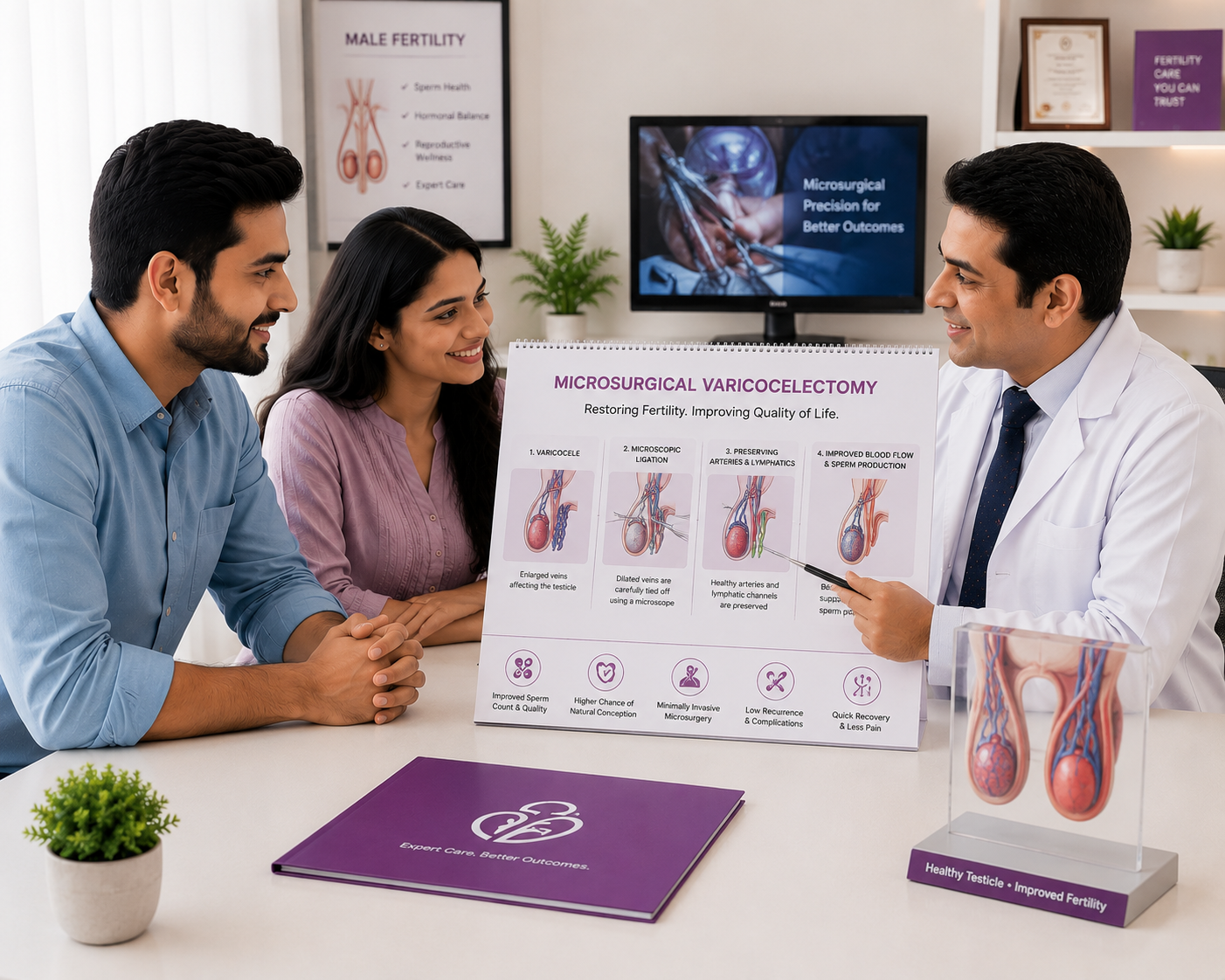
Microsurgical Varicocelectomy
Treatment Overview
Who Needs It?
- Men diagnosed with varicocele and infertility
- Low sperm count, motility, or abnormal sperm morphology
- Testicular pain or discomfort caused by varicocele
- Men with poor semen analysis results
- Couples experiencing difficulty conceiving naturally
Why Choose Us?
- Experienced microsurgical fertility specialists
- Advanced microscope-assisted surgical techniques
- Minimally invasive approach with faster recovery
- High success rates and reduced complication risk
- Personalized fertility care and follow-up support
Benefits
- Improved sperm count and sperm quality
- Enhanced chances of natural conception
- Reduced testicular pain and discomfort
- Lower risk of recurrence and complications
- Faster recovery with minimal surgical trauma
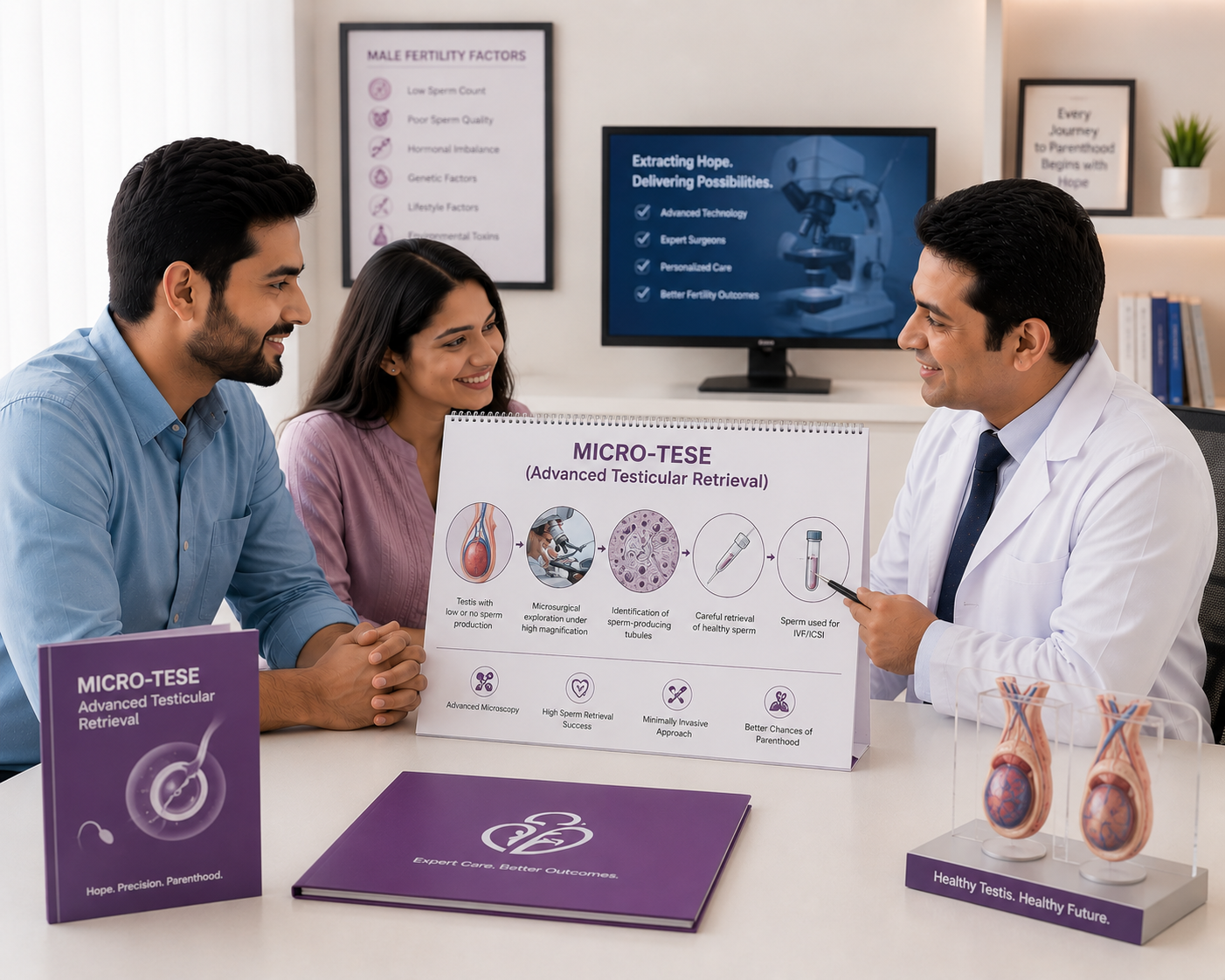
Micro-TESE (Advanced Testicular Retrieval)
Treatment Overview
Who Needs It?
- Men diagnosed with non-obstructive azoospermia
- Patients with severely impaired sperm production
- Men with failed previous sperm retrieval procedures
- Individuals planning IVF/ICSI treatment
- Men with genetic or hormonal causes of infertility
Why Choose Us?
- Experienced microsurgical fertility specialists
- Advanced microscope-assisted retrieval techniques
- High precision with minimal tissue trauma
- Comprehensive fertility and IVF support
- Personalized treatment and post-procedure care
Benefits
- Improved chances of successful sperm retrieval
- Minimally invasive and tissue-preserving approach
- Enables biological parenthood in severe infertility cases
- Supports IVF/ICSI fertility treatments
- Reduced risk of complications and faster recovery
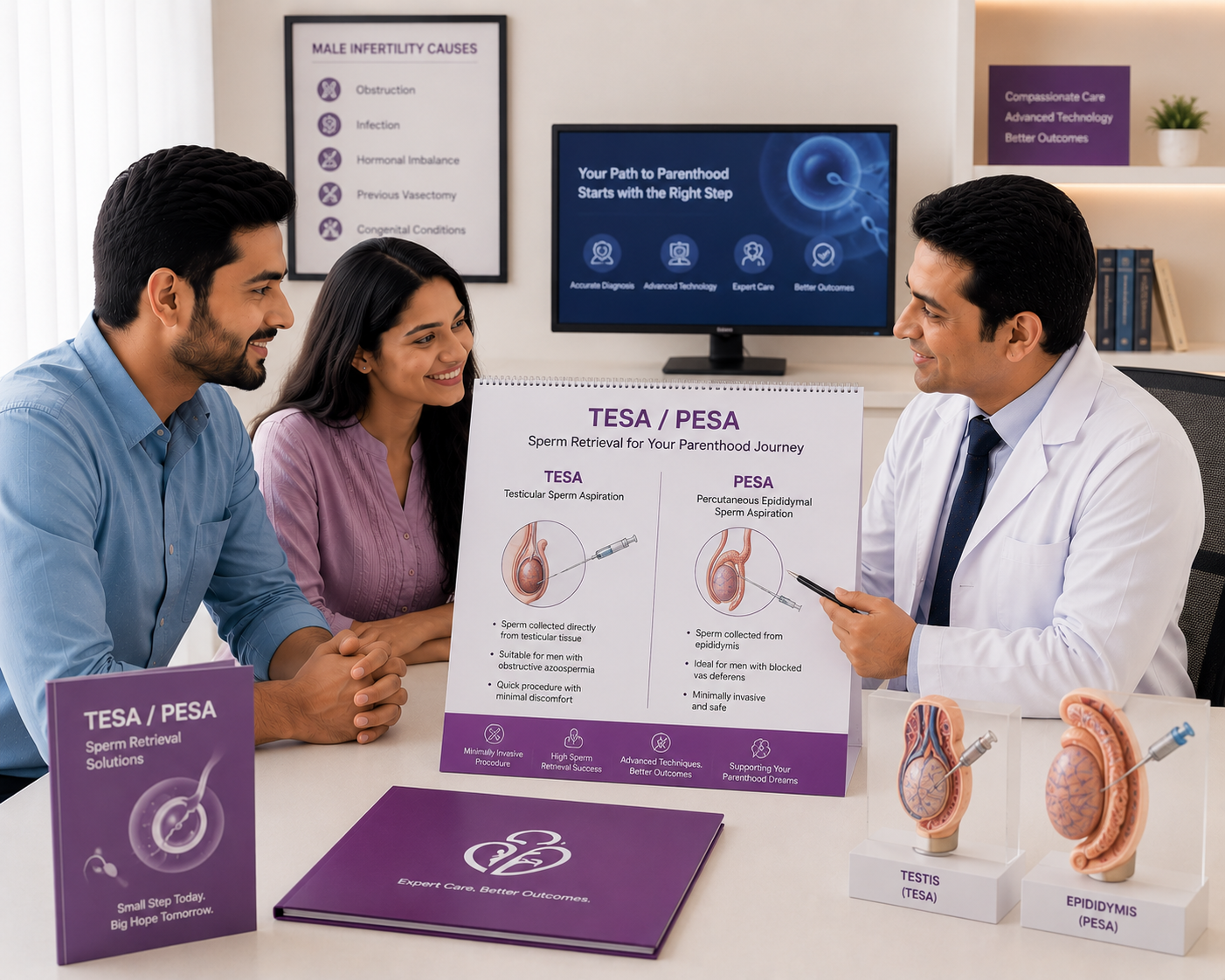
TESA / PESA
Treatment Overview
Who Needs It?
- Men with obstructive azoospermia
- Patients with blocked sperm ducts or vas deferens
- Men with previous vasectomy seeking fertility treatment
- Individuals unable to ejaculate sperm naturally
- Couples planning IVF or ICSI procedures
Why Choose Us?
- Skilled fertility and andrology specialists
- Advanced minimally invasive sperm retrieval techniques
- Safe, quick, and effective procedures
- Comprehensive IVF/ICSI support services
- Personalized fertility care and counseling
Benefits
- Successful sperm retrieval for assisted reproduction
- Minimally invasive with quick recovery time
- Performed under local anesthesia with minimal discomfort
- Improved chances of biological parenthood
- Effective solution for obstructive male infertility
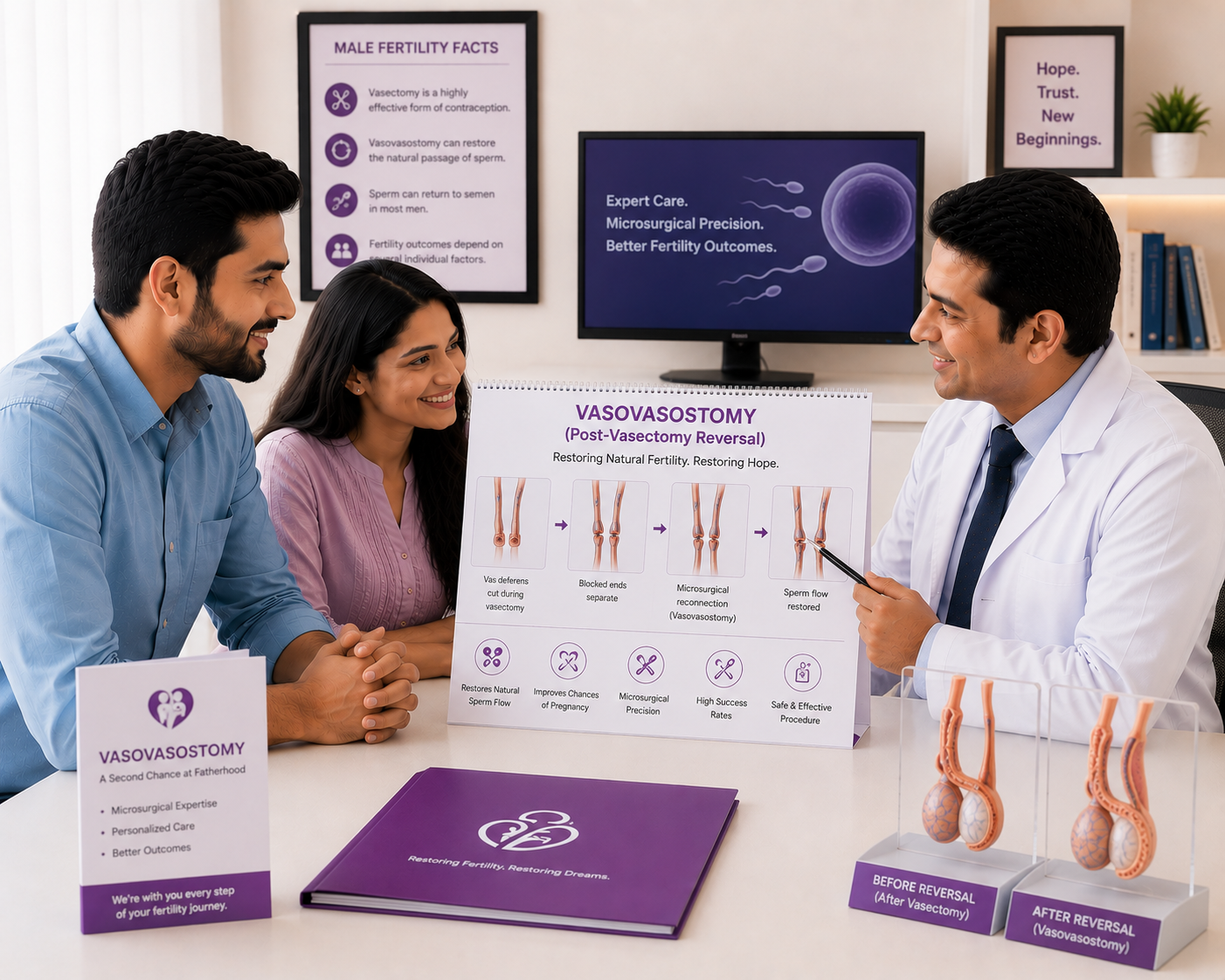
Vasovasostomy (Post-Vasectomy Reversal)
Treatment Overview
Who Needs It?
- Men seeking fertility after a previous vasectomy
- Couples planning pregnancy after family planning changes
- Men experiencing post-vasectomy pain syndrome
- Patients wanting a natural conception option
- Individuals with healthy sperm production after vasectomy
Why Choose Us?
- Experienced microsurgical fertility surgeons
- Advanced precision-based surgical techniques
- High success rates in sperm flow restoration
- Comprehensive fertility evaluation and follow-up care
- Personalized patient-centered treatment approach
Benefits
- Restores natural sperm flow and fertility potential
- Improved chances of natural conception
- Minimally invasive microsurgical approach
- Reduced risk of complications and scarring
- Faster recovery and long-term reproductive benefits
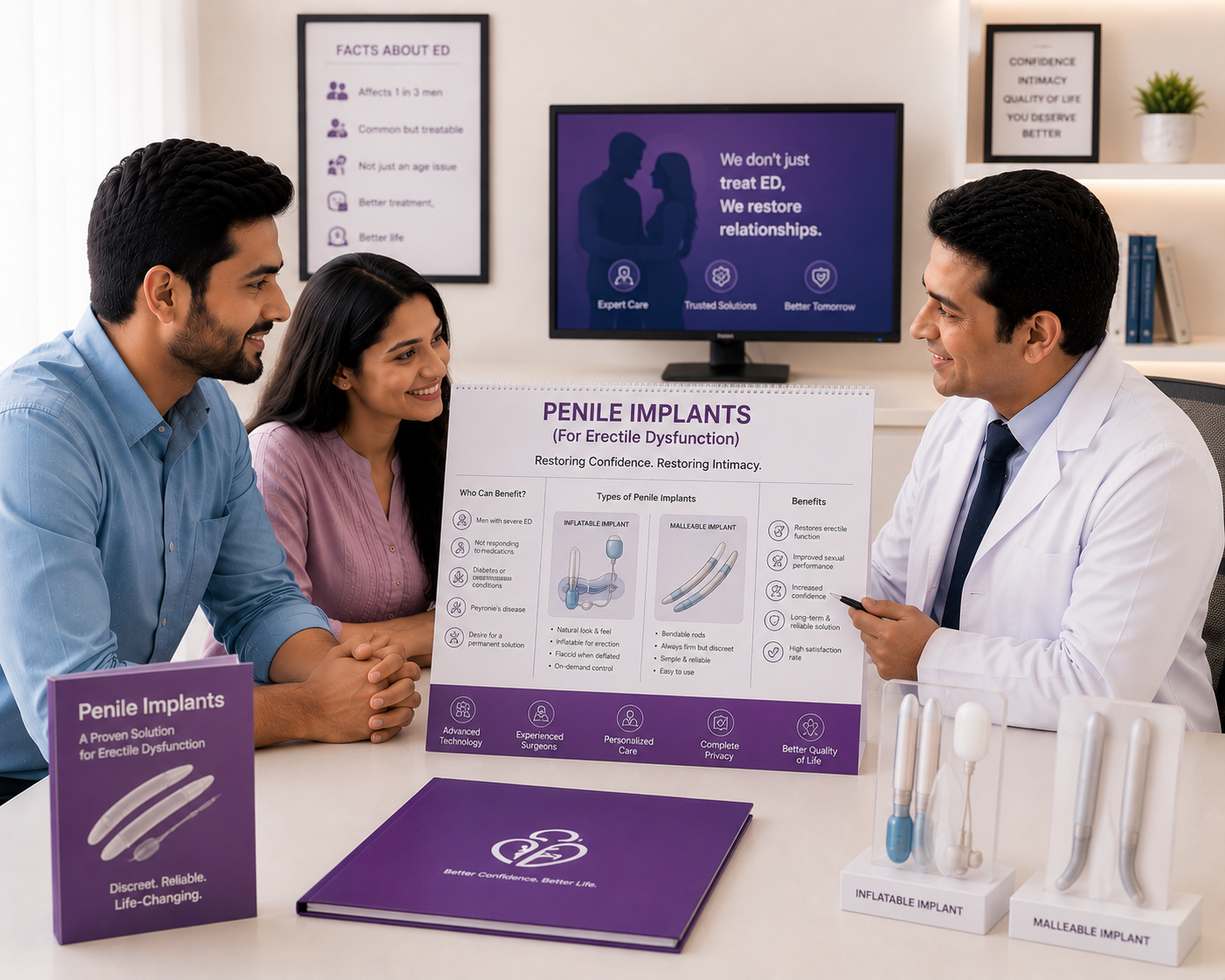
Penile Implants (for Erectile Dysfunction)
Penile implants are advanced surgical solutions designed to treat erectile dysfunction (ED) in men who do not respond effectively to medications or other non-surgical treatments. These implants help restore sexual function, confidence, and intimacy with safe and reliable long-term results.
Treatment Overview
The procedure involves placing a specialized medical device inside the penis to allow controlled and natural-feeling erections. Penile implants are available in inflatable and malleable types, and the treatment is customized based on the patient’s condition and lifestyle needs.
Who Needs It?
- Men with severe erectile dysfunction
- Patients not responding to oral ED medications
- Erectile dysfunction caused by diabetes or vascular disease
- Men with Peyronie’s disease and ED
- Individuals seeking a permanent and reliable ED solution
Why Choose Us?
- Experienced urology and andrology specialists
- Advanced minimally invasive surgical techniques
- Personalized implant selection and treatment planning
- High standards of safety, privacy, and patient care
- Comprehensive post-surgical support and counseling
Benefits
- Restores erectile function and sexual confidence
- Long-term and reliable treatment solution
- Improved intimacy and quality of life
- High patient satisfaction and success rates
- Natural appearance and discreet functionality
We had been trying to conceive for 5 years. My semen analysis showed a sperm count of only 4 million and I was diagnosed with grade 3 varicocele. Two doctors had recommended open surgery. Dr. Gautam suggested microsurgical varicocelectomy — I was discharged in 2 days, and after 3 months my count was up to 38 million. My wife is now 6 months pregnant. Genuinely, thank you Dr. Gautam.
My report showed zero sperm count. Everyone at home was devastated. Dr. Gautam explained that it was non-obstructive azoospermia but there was still a chance with Micro-TESE. The surgery lasted 4 hours, sperm were successfully retrieved, and we got an embryo in the same IVF cycle. Today our son is 5 months old. This doctor gives hope when no one else does.


Common causes include low sperm count (oligospermia), poor sperm motility, azoospermia (no sperm in semen), varicocele, hormonal imbalance, blockages, genetic factors, and lifestyle issues like smoking, obesity, or heat exposure.
Yes, many cases respond to medical management — hormonal therapy, antioxidants, lifestyle changes, and treatment of underlying infections. Surgery is only recommended when medical treatment isn't enough or in cases like varicocele or azoospermia.
Azoospermia means no sperm are found in the ejaculate. Even in severe (non-obstructive) cases, procedures like Micro-TESE can retrieve sperm directly from the testicles, which can then be used with IVF/ICSI to achieve pregnancy.
Around 60–70% of men see a significant improvement in sperm count and motility within 3–6 months post-surgery, and natural conception rates improve substantially in couples where varicocele was the primary factor.
Costs vary by procedure. Semen analysis and consultation start from ₹1,500–₹3,000. Microsurgical varicocelectomy typically ranges from ₹80,000–₹1,50,000. Micro-TESE and TESA range from ₹60,000–₹2,00,000, depending on complexity.
Micro-TESE is performed under general anesthesia, so there is no pain during the procedure. Most patients resume normal activities within 3–5 days, with full recovery in 1–2 weeks.
Yes. Quitting smoking, reducing alcohol, maintaining a healthy weight, managing stress, avoiding excessive heat exposure (hot tubs, tight underwear, laptops on the lap), and correcting nutritional deficiencies can improve sperm parameters within 3 months — the average sperm production cycle.
After medical management or varicocelectomy, improvements typically show in 3–6 months. Sperm retrieval procedures (Micro-TESE, TESA) allow IVF/ICSI to proceed in the same cycle. Your doctor will guide the exact timing based on your specific case.